

Thank you for Subscribing to Agri Business Review Weekly Brief

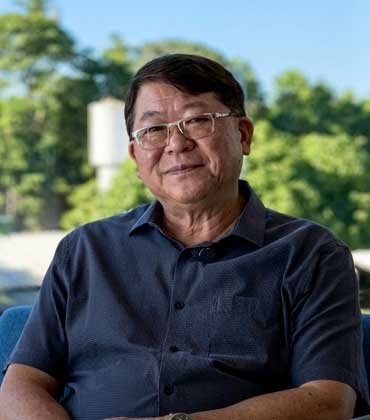 Iwao Akamatsu, Founding Partner
In 1999 he was an intern at the Nagano Forestry and Forest Products Research Center in Japan, through a scholarship granted by JICA (Japan International Cooperation Agency), specializing in the production of mushrooms in substrate.
For almost 3 decades, Yuri Cogumelos has been working to popularize mushroom farming and consumption in Brazil.
Innovative Approaches to Mushroom Farming
Mushrooms are fungi and, as such, are susceptible to numerous environmental interferences, such as temperature, humidity, oxygen levels and the presence of other fungi, viruses and bacteria.
Understanding the correlation of these mechanisms and knowing how they survived the environmental changes and have adapted is fundamental.
Therefore, approaching the activity as constant research and learning is essential for successful cultivation.
The search for a healthier diet that provides proteins and amino acids from unconventional sources, combined with agricultural practices that have less environmental impact, has decisively contributed to boosting mushroom production.
The extraordinary efficiency and metabolic versatility of fungi make mushrooms one of the best alternatives to meet human nutritional needs.
Circular Agriculture Practices in Mushroom Farming
Mushrooms, in general, are nature's recyclers, reintegrating organic matter into the environment. Utilizing locally available agricultural waste is the key to mushroom production.
-
Managing the team through example is the most effective way to develop a culture of individual responsibility.
This allows the production of food with high nutritional value, taking advantage of agroforestry waste, and at the end of the process, this waste returns to nature as an organic matter by-product, contributing to circular agriculture.
A small mistake in mushroom handling can result in the total loss of production. Managing the team through example is the most effective way to develop a culture of individual responsibility, and the pursuit of continuous improvement minimizes errors that could lead to failure.
It's worth saying, even if it's repetitive. You need to have love for the activity. And as a complement, view each mistake as a learning experience, since we are dealing with a living being, susceptible to vicissitudes and understand that this activity is never totally predictable.
